ENGED 275 Debbie Skweres Chapter 6 Developing Fluent readers and writers

Reading fluency-The ability to read effortlessly and efficiently and includes three components: automaticity, speed and prosody.

 Automaticity-recognize familiar words automatically without conscious thought, and identify unfamiliar words almost as quickly.

Speed-fluent readers read at least 100 words per minute. How many words per minute a person can read.

Prosody-Fluent readers read sentences expressively, with appropriate phrasing and intonation.

 High frequency words-most common words that readers use again and again.

 Word walls-words that are placed on the wall with new words added to them as students learn them.

Word identification strategies-Students use 4 word identification strategies to decode unfamiliar words. Phonic analysis, syllabic analysis, morphemic analysis and decoding by analogy.

Phonic analysis-students apply what they’ve learned about phoneme-grapheme correspondences and phonics, rules, and spelling patterns to decode words.

Decoding by analogy-students use their knowledge of phonograms to deduce the pronunciation or spelling of unfamiliar words.

Syllabic analysis-students break a multisyllabic word into syllables and then apply their knowledge of phonics to decode the word, syllable by syllable.

Morphemic analysis-students use knowledge of root words and affixes to read or write an unfamiliar word.

Interactive writing-process used to teach students how to write involving sharing the pen between teacher and student.

Guided reading-teacher working with small group of readers and providing a text that students read with support, coaching the learners as they use problem-solving strategies to read.

Language experience approach- literacy development method that is based on a child’s existing experience of language.

Choral reading-learners read together with or without the teacher.

Assessing reading fluency-Informally monitor students’ reading fluency by listening to them read aloud during guided reading lessons, reading workshop, or other reading activities. This is done at the beginning of the school year and at the end of each month the data collected is students’ accuracy, speed, and prosody to document their progress and provide evidence of their growth over time.

Activities to increase reading practice-reading aloud,  word walls, choral reading, readers theatre, listening centers, partner reading.

Rubrics- a guide listing specific criteria for grading student work. It includes levels of achievement and is scored numerically.

Running records- a way to assess a student’s reading progress by systematically evaluating a student’s oral reading and identifying error patterns.

Writer’s voice-the tone or emotional feeling of a piece of writing. The writer develop their voice through the words they choose and how they string them into sentences.

Dysfluent readers- Reading for understanding is disrupted by anything that impedes the mapping of print to language, word recognition difficulties, when students stumble on particular words or lack word recognition automaticity. Comprehension difficulties also disrupt fluency.

Writers- a person who uses written words in various styles and techniques to communicate their ideas. 

Obstacles to fluency: Lack of automaticity, unfamiliarity with word-identification strategies, slow reading speed, slow writing speed, lack of prosody, voiceless writing.

Application in classroom- Working on student fluency in reading and writing using word walls will help students to see the words and be able to identify them easier. Adding new words to the wall will add in speed and automaticity. Students will be able to practice high-frequency words and clarify easily confused word. I can use mini-lessons to help with high-frequency words. Assessing fluency in both reading and writing will help to guide instructional decisions.
ENGED 275 Debbie Skweres Chapter 5

Phonemes– A sound or group of different sounds perceived to have the same function by speakers- C in cat k in kit sc in scat, sk in skit.

Graphemes– The smallest meaningful contrastive unit in a writing system

graph phonemic, match letter and letter combinations to sound and blend sounds to form words, and decode and spell vowel patterns.

phonemic awareness– ability to notice, think about, and work with the individual sounds in words

phonemic awareness strategies-Identifying sounds in words, children will be able to identify a word that begins or ends with a particular sound.

Categorizing sound in words- Children recognize the odd word in a set of three word

Substituting sound to make new words-Children remove a sound from a word and substitute a different sound.

Blending sound to form words-children blend two, three or four individual sound to form a word.

Segmenting a word into sounds-Children break a word into its beginning, middle and ending sounds.

 Teaching phonemic awareness-Through a language rich environment singing songs, chant rhymes, read aloud wordplay books, and play games. Instruction should meet three criteria. 1.) The activities should be appropriate for 5-6 yeard olds. 2.) Instruction needs to be planned and purposeful, not just incidental. 3.) Phonemic awareness activities should be integrated with other components of a balanced literacy program.

Elkonin boxes, instructional method used to build phonological awareness by segmenting words into individual sounds

c a t

 Phonics– a method of teaching people to read by correlating sounds with letters or groups of letters in an alphabetic writing system.  

Digraphs, two letters that make one sound ch-china

Diphthongs– the sound formed by the combination of two vowels in a single syllable in which the sound begins as one vowel and moves toward another coin, loud, side

r-controlled vowels-the r bosses the vowel to make a new sound. When the a is followed by r, it makes the are and when it follow the o it makes the or sound.

Onset-The beginning, the consonant that precedes the vowel.

Rime-the vowel and any consonant sounds that follow the onset.

Teaching phonics, the best way to teach phonics is through a combination of explicit instruction and authentic application activities. These are taught in predetermined sequences. Beginning with the consonants followed by the short vowels

Stages of spelling development,

1.  Emergent Spelling (Precommunicative spelling or pre phonemic)- students use scribbles, letter like forms letters and nmber to represent words and sentences. This stage does not understand phoneme-grapheme correspondences

2. Letter Name-Alphabetic spelling (Semi phonetic spelling or early phonemic) stage In semi phonetic spelling, students are aware of the alphabetic principle . Their spelling will be abbreviated with one, two, or three letter combinations used to represent a longer word. They will use a letter-name strategy to determine the spelling of words.

3. With-in word pattern spelling (Phonetic spelling) The student may have particular spellings for long and short vowels, for plurals and for verb tenses, and for other grammatical features of words. Children will select letters based entirly on sound, with little or not attention paid to conventions.

 4.- Syllables and affixes spelling (Transitional spelling) students follow the conventions of English spelling. They will use morphological . Their percentage of correctly spelled words will be high

5. Derivational relations spelling (Conventional spelling) In addition to following the conventions of English spelling. In addition they will understand how to apply prefixes and suffixes, contractions, plurals and verb markers to words.

Teaching spellinggive weekly spelling tests, teach spelling strategies, Matching instruction to students’ stage of spelling. Provide daily reading and writing opportunities, teaching students to spell high-frequency words.

Strategies include-

  • Segmenting the word and spelling each sound. Sounding it out
  • Spelling unknown words by analogy to familiar words
  • Applying affixes to foot words
  • Proofreading to locate spelling error in a rough draft
  • Locating the spelling of unfamiliar words in a dictionary.

Classroom application: In order to teach students spelling, phonics and phonemic awareness I plan to use the strategies in this chapter. I would use the Elkonin boxes to show how to segment a word easily. Then teaching spelling will be easier once students can segment. I can also have my students sing songs and chant rhyming words to practice phonemic awareness.

ENGED 275 Debbie Skweres Chapter 4

Shared reading- reading along as someone else reads.

Interactive reading-Students support classmates by sharing the reading responsibilities and teacher provide assistance when needed.

 Choral reading- Students take turns reading lines.

Guided reading- reading that involves support, coaching from the teacher and the use of problem-solving strategies to read the text.

Word wall– a collection of words that are displayed in large visible letters on a wall, bulletin board, or other display surfaces in a classroom.

Mini-lessons- smaller lessons with a narrow focus that provides instruction in a skill or concept those students will then relate to a larger lesson that will follow.

Interactive read-aloud- As teachers read aloud they engage students in activities rather than postponing student involvement. The books read are usually a little above students level.

Concepts of print- Concepts of print refers to the ability of a child to know and recognize the ways in which print “works” for the purposes of reading, particularly with regard to books.

Letters and words hold meaning, Print is what we read,  Illustrations correspond to the print, We read from left to right, We read from top to bottom, Return sweep – when we get to the end of a line on a page we return to the next line and begin reading on the left again, Books have a front, back, and an author, Difference between a letter and a word, Spaces between words, Where to start reading, One-to-One Correspondence – Print matches spoken words, Punctuation.

Concepts about words– The ability of a reader to match spoken words to written words while reading. Students with a concept of word understand that each word is separate and that words are separated by a space within each sentence.

Concepts about the alphabet- Alphabetic Understanding: Words are composed of letters that represent sounds. Phonological Recoding: Using systematic relationships between letters and phonemes (letter-sound correspondence) to retrieve the pronunciation of an unknown printed string or to spell words.

 Routines to teach the alphabet- The alphabet song, alphabet chart, environmental print, letter books, these are things that provide basic information for children to learn the alphabet and identify and form letters.

 Environmental print- Logo’s that are associated with companies or products that people recognize before they see the written word.

Assessing concepts of written language-Observe children as they look at books and reread familiar ones to monitor their developing knowledge about written language concepts. They also watch children as they pretend writing and write their names and other familiar words and phrases The see which concepts children understand and which ones they need to work on during shared reading.

Emergent reading and writing stage- children begin to understand that writing is a form of communication and their marks on paper convey a message. They start to notice environmental print and take an interest in books. They distinguish between writing and drawing.

Beginning reading and writing stage- Children are aware of the alphabetic principle, they learn about phoneme-grapheme correspondences; phonics rules in words. Identify letter names and sounds, write from left to right.

Fluent reading and writing stage- Students are confident in their understandings of text and how text works, and they are reading independently. Identity most words automatically and use the writing process to write drafts and final copies.

Revision groups-  students work together to revise and go over what they have written. Revision skills complement reading skills; revision requires that writers distance themselves from the writing and critically evaluate a text.

Morning message- A daily literacy routine that teachers use to teach literacy concepts, strategies, and skills. The teacher writes a brief message before students arrive and are ready when the class starts. Students then would count the letters and reread them for practice.

Predictable books- sometimes called pattern books, are picture books that contain rhyme, repetitive words, songs, refrains, or phrases, questions or some other structure that makes them predictable.

Language-experience approach- The Language Experience Approach is a method for teaching literacy based on a child’s existing experience of language. 

Interactive writing- students and teacher share the pen while writing together this is used to teach students how to write.

 Manuscript handwriting- writing that consists of unjoined letters made with lines and circles and that is often taught in elementary school.

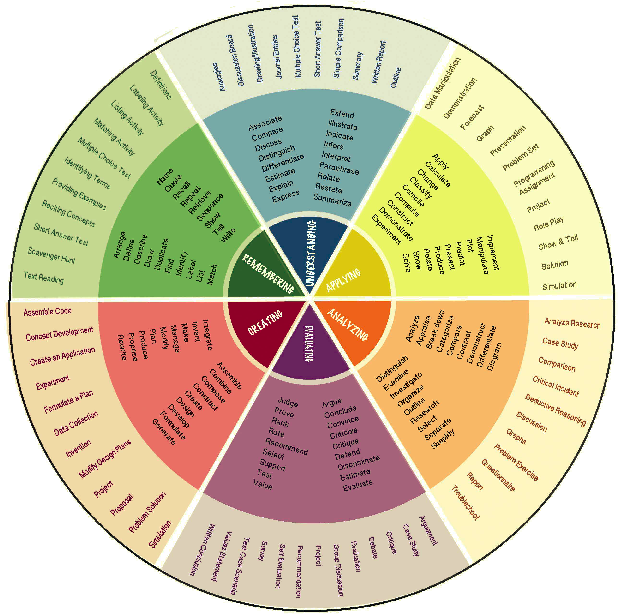
Classroom application: Reading and writing objectives require SMART steps: to be Specific, Measurable, Attainable, Relevant and Time-bound. Using Bloom’s taxonomy and the SMART steps it will be easy to write clear and concise reading and writing objectives.

Picking the right level, definition, verbs, and behavior Bloom’s Taxonomy aids in learning objectives.

ENGED 275 Debbie Skweres Chapter 3 Assessing Literacy Development

Running records– is a way to assess a student’s reading progress by systematically evaluating a student’s oral reading and identifying error patterns.

 Mini-lessons- smaller lessons with a narrow focus that provides instruction in a skill or concept those students will then relate to a larger lesson that will follow

 Book talk– is a short presentation about a book with the goal of convincing other people to read it. It’s not a formal book report or review.

4 steps of assessment,

Step# 1– Planning for assessment This is done at the same time as planning for instruction. Planning for assessment before they began teaching teachers are prepared to use assessment tools wisely otherwise it turns out to be impromptu.

Step#2-Monitoring students progress- Monitoring students learning daily to make instructional decisions. This is done through observation, conferences and other informal, formative procedures. This allows teachers to learn about students individual strengths and weaknesses and the impact of their instruction.

Step#3– Evaluating students learning-Teachers document students learning to make judgments about their achievements. This can be done with tests most teachers prefer to evaluate students actual reading and writing to make judgments about their achievement.

Step#4- Reflecting on students’ learning- Teachers reflect on their instruction to improve their teaching effectiveness. Looking to see how they might need to adapt instruction to meet students’ needs.

Anecdotal notes, – notes the teacher makes that describe specific events, report rather than evaluate and relate to events to other information about the student. These are about reading and writing activities, what questions did the student ask, strategies and skills they use fluently and those they do not understand.

Rubrics, – scoring guide used to evaluate performance according to specific criteria and levels of achievement.

Portfolios, – a collection of the student’s work that shows how much they have grown and is used as an assessment tool.

Independent reading level– the level a student can read at independently comfortably and not struggle.

Instructional reading level– the level that students can read at with support but not on their own with 90-94% accuracy.

Frustration reading level– The level where materials are too difficult for students to read successfully even with assistance.

Guided reading– reading that involves support, coaching from the teacher and the use of problem-solving strategies to read the text.

Leveled books,- Books that have been leveled according to students level of difficulty.

Lexile framework– A method of matching books to readers by measuring both students reading levels and the difficulty level of books. (Lexile Score) is a method of estimating the difficulty level of the text.

 Informal reading inventories, (IRI) An individually administered reading test composed of word lists and graded passages that are used to determine students’ independent, instructional and frustration reading levels and listening capacity levels.

Miscue analysis– is a means to use a running record for diagnosis to identify students’ specific difficulties. Not only is the running record a way to identify reading rate and reading accuracy, but it also is a way to assess reading behaviors and identify reading behaviors that need support.

SOLOMStudent Oral Language Observation Matrix is a rating scale that teachers use to assess students command of English as they observe them talking and listening in real day-to-day activities.

Five components of oral language,

 Listening – teachers score students along a continuum from unable to comprehend simple statements to understanding everyday conversations.

Fluency- Teachers score students along a continuum from halting, fragmentary speech to fluent speech, approximating that of native speakers.

Vocabulary– score students along a continuum from extremely limited word knowledge to using words and idioms skillfully.

Pronunciation– Score students along a continuum from virtually unintelligible speech to using pronunciation and intonation proficiently, similar to native speakers.

Grammar-Teachers score students along a continuum from excessive errors that make speech unintelligible to applying word order, grammar, and usage rules effectively.

 K-W-L charts,- Know, Want, Learned, is a graphical organizer designed to help in learning. The letters KWL are an acronym, for what students, in the course of a lesson, already know, want to know, and ultimately learn. … 

Test-taking strategies– Students learn to use strategies and they vary the strategies to the type of test they are taking. These strategies include: Read entire question first, Look for keywords in the question first, Read all answer choices before choosing the correct answer, Answer easier questions first, Make smart guesses, Stick with your first answer, Pace yourself, Check your work carefully.

High-stakes testing,-Standardized achievement tests that are administered with the knowledge that important finding, placement, graduation or tenure decisions are riding on the results.

Portfolio assessment An alternative form of assessment that uses students collections of their work samples, including writing, multimedia projects, and other artifacts to demonstrate growth and achievement over time.

Use in the classroom: By testing and monitoring students I will be able to see where they need help and what they are doing well in. Using running records I will be able to assess my student’s reading progress by having them read orally and systematically evaluating them and identifying error patterns. I can then adjust my lessons to help them to be more successful. Using a portfolio I will be able to see their progress from the beginning of the year to the end. This will help to determine what level of reading they should be at in the next grade. After watching the video of the lesson plan I will be able to develop lessons that will meet the standards that my school requires. I particularly like how the template is easy to follow and even has a spot for a plan B. I have seen a lot of plan B going into effect this year with all of the weather. What are the goals for students why are they appropriate for these students at this time? This section has a lot of information in it and I took notes so I will be able to fill in what I need to. I like that it reminds us that we are measuring the learning objectives and not the students’ behavior or participation.

ENGED 275 Debbie Skweres Chapter 2 Reading/Writing Process.

Reading process– reading is a constructive process of creating meaning that involves the reader the text, and the purpose within social and cultural contexts. The goal is comprehension, understanding the text and being able to use it for the intended purpose.

Stages of reading

  • stage #1 Prereading is building the background knowledge and having students think about the genre, makes predictions about what is going to happen in the text. (Talk about subjects related to what you are going to read, talk about the author, where it is taking place, get students interested in what is going to be read).
  • Stage #2 Reading- read the text, listen to the text being read, apply reading strategies and skills. (Read the story to students, listen to the students read to you, or to others).
  • Stage #3 Responding- write in reading logs, engage in discussions about the text. (Have students think about what they just read, ask them questions to help guide them to write in their logs)
  • Stage #4 Exploring- reread all or part of the text, learn about the author, examine genre, learn new vocabulary. (Have students look for answers to questions about the text. Who is the author, where did the story take place, are there any new words)
  • Stage #5-Applying- Construct projects, read books relating to the subject, reflect on the reading experience. (Have students explain what they just read, create a poster with the characters on it)

Phonemic awareness- Phonemic awareness is the ability to notice, think about, and work with the individual sounds in words. (C-A-T, M-A-N)

Phonics- a method of teaching people to read by correlating sounds with letters or groups of letters in an alphabetic writing system. (SH, CH, TH, PH) (SHoe, CHew, TooTH, PH=F)

Word identification-the use of phonics to decode a word- Students will be able to sound out the word SH-OE, CH-EW, TOO-TH, PH-

Fluency-reading smoothly, quickly and with expression

Vocabulary- words and their definitions that are used in a language that you are trying to learn- learning new words and looking up what they mean.

Comprehension-How well you understand the words that you are reading (Ask students if they understand what is going on in the text, have them demonstrate to see what they know)

Background knowledge-What students have acquired through life experiences and learning in their home communities, and in school. (Ask students about different things to see what they are familiar with)

Mini-lessons- smaller lessons with a narrow focus that provides instruction in a skill or concept that students will then relate to a larger lesson that will follow. (Teach what letters are and how they go together to make up words. Then write down the words to make sentences, Have the sentences make a story)

Guided reading- reading that involves support, coaching from the teacher and the use of problem-solving strategies to read the text. (While reading a story break it down and ask questions so students need to think about what is going to happen next)

Shared reading- reading along as someone else reads, (Teacher or student reads aloud and others follow by looking at the text as it is read.)

Interactive read-aloud- As teachers read aloud they engage students in activities rather than postponing student involvement. (Student follow along while the teacher is reading and they will stop during the story and do different things, kinda like in Jumanji)

Word wall– a collection of words that are displayed in large visible letters on a wall, bulletin board, or another display surface in a classroom. ( Words that will be used a lot in a classroom are displayed to give students more exposure: WE, ONE, THE, AND )

Word sorts- Words that are cut out and focuses students’ attention on critical features of words, namely sound, pattern, and meaning. They can be sorted into a number of categories. (Ex. Starts with the letter P has four letters, makes a certain sound like the tiles in Scrabble).

Readers theatre-A style of reading that involves reading lines in the style of theater where the readers do not memorize their lines. The readers use vocal expression to help the audience understand the story being told. (Lines in a play, like Little Red Riding Hood, Or Henny Penny)

the writing process- is the process in which students think about and what they do as they write. (This is the what writing is, before, during and after)

  Stages of the writing process

  • Stage #1 Prewriting- getting ready to write. Students choose a topic to consider the purpose and gather ideas. (Talk about different things that the students like and help to pick out a topic)
  • Stage #2 Drafting- students take their ideas and write them down, this stage emphasizes ideas instead of mechanical correctness. Mark paper as a rough draft. ( Have students put down whatever they can think of about their topic)
  • Stage #3 Revising- Students reread their rough draft and refine their ideas, get information from revising groups and make four types of changes, additions, substitutions, deletions, and moves where needed.(As students read through their ideas they start to make sense of them, why they are important to the topic, They will add things and subtract things that are not important. These will be put into sentences and paragraphs)
  • State #4-Editing- Putting the paper into its final form, fixing spelling, homophone errors, punctuation, capitalization, and sentence structure. (Students will check their own work and make corrections where needed.)
  • Stage #5- Publishing- Format the paper, make a final copy and share the paper with the audience. By sharing the student think of themselves as real authors. (Have peers read each other’s papers and give feedback)

 Reading strategies- Decoding, word-learning, comprehension, study, these are all strategies that highlight the kinds of thinking that students engage in while they’re reading.

Writing strategies- Tools students use deliberately to craft effective compositions, prewriting, drafting, revising, editing, and publishing. Students need explicit instructions on these strategies because they do not acquire knowledge through reading and writing.

Applying the reading and writing strategies in the classroom will help to improve literacy. Different styles of reading will keep students interested in reading. This interest will add to the writing process. If reading strategies are successful then writing will be a lot easier. Doing daily reading and writing in journals or blogs will allow students to engage in different text experiences.

ENGED 275 Debbie Skweres Chapter 1 continued

Principle 5- Effective teachers address standards-the common core standards show teachers what should be taught but leave how to teach it up to them.                                                          

Principle 6- Effective teachers scaffold students’ reading and writing– By demonstrating, guiding and teaching and varying the amount of support they give to students.

Principle 7- Effective teachers organize for instruction-by creating their own program that fits the needs of the students’ and the school’s standards and curricular guidelines.

Principle 8- Effective teachers differentiate instruction-by adjusting the instruction to accommodate students of different levels of development, academic achievement, and ability.

Key vocabulary

Scaffolding-the support a teacher provides to students as they read and write through different amounts of supports.

Shared reading-teachers share the reading with the students on bigger books, the teacher does most of the reading and students join in and read familiar and predictable words and phrases.

 Language Experience Approach-in younger students the teacher writes the children’s dictation on paintings and brainstorm lists of words on the whiteboard.

Choral reading-students take turns reading lines  

Readers theatre-students assume the roles of characters and rad lines in a script.

Interactive writing-students and teacher create text and write a message.  

Minilessons-as teachers teach lessons they provide practice activities and supervise as students apply what they’re learning.

instructional programs-a variety of programs are used to represent the balanced approach to literacy programs should reflect these principles: create a community of learners, incorporate the components of the balanced approach, scaffold students’ reading and writing experiences. Programs would be guided reading, basal reading programs, literature focus units, literature circles, reading and writing workshops.

Guided reading-teachers personalize instruction and meet students’ individual needs by meeting in small groups that are at the same level for teacher-directed lessons.

Literature circles-teachers create literature focus units featuring high-quality picture-book stories and novels. Students are in small groups to read the story, and then they discuss the story.

Differentiation-adjusting instruction for different levels of learners in development, academic achievement, and ability.

 Nurturing English Learners-Students that are learning to speak Englis benefit from participating in the same instructional programs that mainstream students do. Teachers create classroom learning contexts that respect minority students and meet their needs.

Assessment-Information teachers use to see what areas a student needs.

Running records-continuous records of a students’ oral reading to analyze their ability to solve reading problems.

Linking instruction and assessment in four steps-

Planning: Using knowledge about students’ reading levels, background knowledge and strategy skill competencies to plan appropriate instruction.

Monitoring: monitor instruction that is in progress as they are observing students in order to make modifications when necessary to improve the quality of instruction to meet students’ needs.

Evaluating: evaluate students using a rubric and checklists to assess students’ reading and writing projects and give teacher made tests to be able to document student achievement.

Reflecting: Judging the effectiveness of instruction by analyzing students’ reading and writing projects and test results and consider how to adapt instruction to improve student learning.

Rubrics- A guide listing specific criteria for grading student work, it includes levels of achievement and is scored numerically.

The principles above show how an effective teacher can demonstrate their responsibility and commitment to ensure students are successful. I will be able to apply learning theories while creating a classroom community of learners. Using the four-cueing systems along with scaffolding I will be able to create a balanced approach to support my students reading and writing development. I particularly believe that differentiating instructions is at the top of the rubric for classroom management. We have such a diverse population in our school system that it is impossible to teach without differentiating.

Debbie Skweres EngEd 275 Chapter 1 Becoming an Effective Literacy Teacher

Take 3 hope this is the charm

Just adding a little note to see if my followers are getting notifications.

Principle #1-Effective teachers understand how students learn. By understanding how students learn influences how teachers teach.

Principle #2- Effective teachers support students’ use of the cueing systems. By supporting the communication system that students place a priority on.

Principle #3- Effective teachers create a community of learners. The classroom is a community made up of the teacher and students. The type of community the teacher creates strongly influences the learning that takes place.

Principle #4- Effective teachers adopt a balanced approach to instruction. By combining explicit instruction, guided practice, collaborative learning, and independent reading and writing.

Vocabulary

Behaviorism– teacher centered theory that believes that behavior can be learned or unlearned.

Constructivism– a student-centered theory that believes students are active and engaged learners who construct their own knowledge.

Schema theory-Peaget believed that knowledge is organized into cognitive structures that reflect knowledge of past experiences.

Inquiry learning– John Dewey theorized that learners are innately curious and actively create their own knowledge and concluded that collaboration is more conducive to learning than competition.

Engagement theory-Theorists found that engaged learners are intrinsically motivated. Engaged learners have confidence that they’ll succeed when they participate in authentic literacy activities and collaborate with classmates.

Sociolinguistics-Theory that learners use language to organize their thoughts. Vygotsky recommended that teachers incorporate instruction so students can talk about what they are learning.

Information processing-The process of comparing the mind to a computer and explains how information moves through a series of processing units, sensory register, short-term memory, and long-term memory as it is stored.

Phonological system– The sound system of English with approximately 44 sounds and more than 500 ways to spell them.

Syntactic system– The structural system of English that governs how words are combined into sentences.

Semantic system–  The meaning system of English that focuses on vocabulary.

Pragmatic system- The system of English that offers language choices according to social and cultural uses.

Common Core Standards– A set of standards that shows what should be taught but leave up to the teacher how to accomplish it.

Balanced literacy components– comprehension, content area study, literacy strategies and skills, literature, oral language, phonemic awareness and phonics, reading, spelling, vocabulary, and writing.

Classroom application how will I use this in my classroom? By understanding and adopting these principles I will be able to help students by creating a community of learners. I will get to know each student and by doing so I can ensure that they receive the different supports that they need to be able to be successful.

Debbie Skweres EngEd 275 Chapter 1 Becoming an Effective Literacy Teacher

Just adding a little note to see if my followers are getting notifications.

Principle #1-Effective teachers understand how students learn. By understanding how students learn influences how teachers teach.

Principle #2- Effective teachers support students’ use of the cueing systems. By supporting the communication system that students place a priority on.

Principle #3- Effective teachers create a community of learners. The classroom is a community made up of the teacher and students. The type of community the teacher creates strongly influences the learning that takes place.

Principle #4- Effective teachers adopt a balanced approach to instruction. By combining explicit instruction, guided practice, collaborative learning, and independent reading and writing.

Vocabulary

Behaviorism– teacher centered theory that believes that behavior can be learned or unlearned.

Constructivism– a student-centered theory that believes students are active and engaged learners who construct their own knowledge.

Schema theory-Peaget believed that knowledge is organized into cognitive structures that reflect knowledge of past experiences.

Inquiry learning– John Dewey theorized that learners are innately curious and actively create their own knowledge and concluded that collaboration is more conducive to learning than competition.

Engagement theory-Theorists found that engaged learners are intrinsically motivated. Engaged learners have confidence that they’ll succeed when they participate in authentic literacy activities and collaborate with classmates.

Sociolinguistics-Theory that learners use language to organize their thoughts. Vygotsky recommended that teachers incorporate instruction so students can talk about what they are learning.

Information processing-The process of comparing the mind to a computer and explains how information moves through a series of processing units, sensory register, short-term memory, and long-term memory as it is stored.

Phonological system– The sound system of English with approximately 44 sounds and more than 500 ways to spell them.

Syntactic system– The structural system of English that governs how words are combined into sentences.

Semantic system–  The meaning system of English that focuses on vocabulary.

Pragmatic system- The system of English that offers language choices according to social and cultural uses.

Common Core Standards– A set of standards that shows what should be taught but leave up to the teacher how to accomplish it.

Balanced literacy components– comprehension, content area study, literacy strategies and skills, literature, oral language, phonemic awareness and phonics, reading, spelling, vocabulary, and writing.

Classroom application how will I use this in my classroom? By understanding and adopting these principles I will be able to help students by creating a community of learners. I will get to know each student and by doing so I can ensure that they receive the different supports that they need to be able to be successful.